Atacama Resources Expands North American Gold Portfolio with Atacama 3 Acquisition
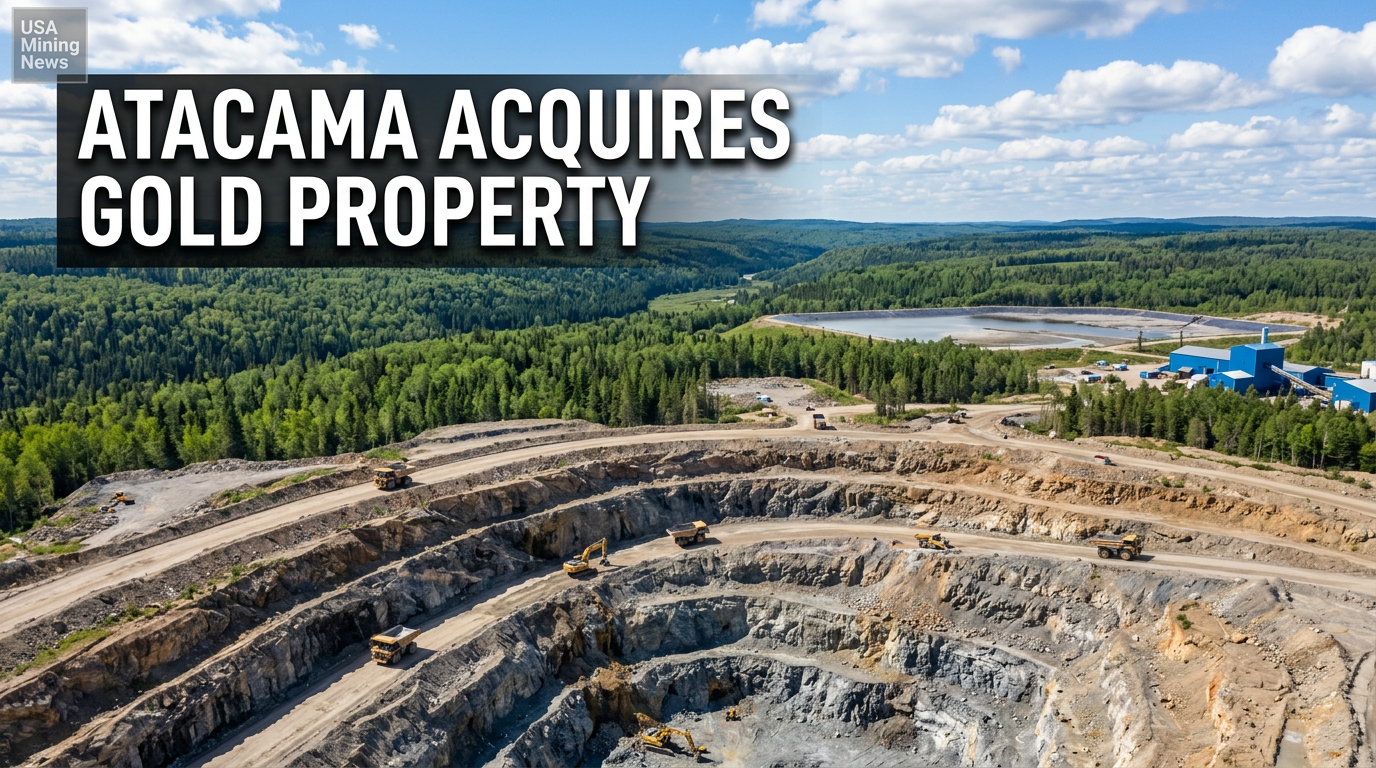
In a move signaling a renewed focus on early-stage exploration within proven gold camps, Atacama Resources announced on February 27, 2026, the complete acquisition of the Atacama 3 mineral property. This strategic transaction places Atacama Resources firmly within the heart of Ontario's prolific Abitibi Greenstone Belt, a region renowned globally for its significant gold endowments and robust mining infrastructure. The announcement, reported by Shree Mishra, underscores Atacama Resources' corporate strategy of identifying and developing high-potential early-stage assets in established mining jurisdictions.
Strategic Acquisition in a Prolific Gold District
The Atacama 3 property spans a considerable area of 255 hectares, comprising 13 contiguous mining claims that are readily accessible year-round via existing road networks. Its location truly defines its strategic value: situated approximately 16 kilometers (or 10 miles) south of Kirkland Lake, Ontario, a town steeped in gold mining history, and critically, just 2.5 miles from Agnico Eagle Mines' well-known Macassa Mine. The Macassa Mine has been a cornerstone of gold production in the region for decades, providing a compelling neighbor for exploration endeavors.
The Abitibi Greenstone Belt, which hosts the Atacama 3 property, is one of the world's most significant and productive greenstone belts, yielding billions of ounces of gold, copper, zinc, and silver over more than a century. Its geological setting, characterized by large-scale fault systems, volcanic rocks, and extensive hydrothermal alteration, is exceptionally favorable for the formation of lode gold deposits. For a junior explorer like Atacama Resources, securing a property within such a geologically prospective and historically rich district offers inherent advantages, including a wealth of regional geological understanding and an established mining culture.
Proximity to a major operating mine such as Macassa is not merely a geographic detail; it implies several important advantages. Geologically, it suggests that the Atacama 3 property lies within a similar mineralizing system, potentially sharing characteristics with a known producing asset. Operationally, it means access to skilled labor, established supply chains, and potentially, shared infrastructure in the long term, should the project advance to development. This can significantly reduce the capital expenditure and operational risks associated with developing a new mine in an isolated location.
Historical Exploration and Promising Indicators
The acquisition is not a blind bet on general regional prospectivity. Atacama 3 comes with a baseline of historical exploration data that provides targeted direction for future work. During a focused exploration campaign between 2006 and 2007, a total of approximately 1,780 meters of diamond drilling was completed across 15 drill-holes. This initial program revealed significant insights into the property's geology and mineralization.
The historical drilling efforts uncovered mineralization primarily associated with shear structures and quartz veining. These geological features are classic indicators for orogenic gold deposits globally, including those found throughout the Abitibi Greenstone Belt. Shear structures act as conduits for mineral-rich fluids, while quartz veins often represent the depositional sites for gold as these fluids cool and chemically interact with the host rock. The presence of such definitive indicators from past work provides Atacama Resources with a strong geological foundation upon which to build its current exploration strategy.
Furthermore, the property's position within a broader structural corridor, encompassing significant fault systems prevalent in the district, adds another layer of geological attractiveness. These regional fault systems are often the primary controls on gold mineralization, acting as major fluid pathways over geological time. Understanding these structural controls is paramount for successful exploration in the Abitibi.
Forward-Looking Exploration Strategy for 2026
Building on the promising foundations laid by historical data, Atacama Resources has outlined a comprehensive exploration plan for 2026. The immediate focus is on systematically evaluating previously identified priority targets and refining them through modern exploration techniques. Such a phased approach is standard industry practice, aiming to progressively de-risk the project and optimize drilling efforts.
Key planned activities for 2026 include:
- Data Integration and Target Refinement: Leveraging the existing historical data to build on previously identified priority targets. This involves re-interpreting geological and geophysical surveys in light of new understanding and technological advancements.
- Permitting Compliance: Necessary drilling permits have already been successfully obtained, a critical early-stage hurdle. Atacama Resources' management is anticipating routine renewals, underscoring their commitment to regulatory compliance and adherence to best practices.
- Surface Work: Completed activities include initial surface stripping and channel sampling. Surface stripping removes overburden to expose bedrock for detailed geological mapping and direct sampling of mineralized structures. Channel sampling involves taking continuous rock samples across geological features for assay, providing grade information across widths.
- Ground Geophysical Surveys: Additional geophysical studies are planned to fine-tune drilling objectives. These may involve conducting ground geophysical surveys, such as Induced Polarisation (IP). IP surveys measure the chargeability and resistivity of subsurface materials, often capable of detecting sulfide mineralization that is frequently associated with gold deposits. These surveys can help define drill targets with greater precision, reducing exploratory drilling costs.
- Subsequent Drilling: Based on the refined targets generated from the combined historical data, surface work, and geophysical surveys, Atacama Resources plans to execute further drilling campaigns. This will be crucial for confirming the extent and grade of mineralization at depth and across the property.
This sequential exploration strategy is designed to systematically explore the property, starting with lower-cost, broader surveys and progressing to more expensive, highly targeted drilling. This derisking process is fundamental to mineral exploration, allowing companies to make informed decisions about resource potential.
Leveraging Infrastructure and Regional Expertise
One of the significant advantages of the Atacama 3 property is its excellent accessibility, with year-round road access. This is not a minor detail in mining logistics; easy access significantly reduces operational costs for equipment mobilization, personnel transport, and eventual material haulage. Furthermore, being located near Kirkland Lake means access to a readily available skilled workforce, established mining service providers, and regional infrastructure such as power grids and water sources, all of which are essential for efficient exploration and potential mine development.
Atacama Resources acknowledges the inherent risks in early-stage exploration, stating clearly that there are "no confirmed mineral resources or assurances of economic viability yet." This transparency is crucial and aligns with industry best practices, reminding investors and stakeholders that the project is still in its nascent stages. The goal of the upcoming exploration program is precisely to move beyond these initial indicators and establish whether economically viable mineral resources exist.
Atacama Resources' Corporate Vision
The acquisition of Atacama 3 aligns perfectly with Atacama Resources' stated corporate strategy: to focus on buying and evaluating early-stage properties in established mining jurisdictions. This approach is common among junior exploration companies, particularly in a commodity-specific market like gold, where established districts often offer lower geological risk and higher potential for discovery due to their known prospectivity and existing data.
Targeting early-stage properties allows companies to acquire assets at a lower cost compared to more advanced projects, which already have defined resources. While this increases the exploration risk, a successful discovery can lead to substantial value creation. By concentrating these efforts in historically productive regions like the Abitibi, Atacama Resources aims to capitalize on existing geological knowledge and infrastructure, enhancing the chances of exploration success.
Market Implications and Future Outlook
The acquisition by Atacama Resources contributes to the ongoing narrative of robust gold exploration activity within the Canadian shield, particularly in Ontario. With gold prices remaining resilient, investor interest in junior exploration plays within proven districts is likely to remain strong. The Atacama 3 project, being an early-stage exploration venture, offers significant upside potential, and its progress will be closely watched by those interested in the junior gold space.
The coming year promises to be active for Atacama Resources as it mobilizes its exploration teams to implement the planned geophysical surveys and subsequent drilling. The results of these programs will be critical in defining the potential future of the Atacama 3 property, moving it along the mining value chain from a conceptual target to a potentially resource-defined project. Success at Atacama 3 could not only unlock significant value for Atacama Resources but also contribute to the long and storied gold production history of the Kirkland Lake district and the wider Abitibi Greenstone Belt.